
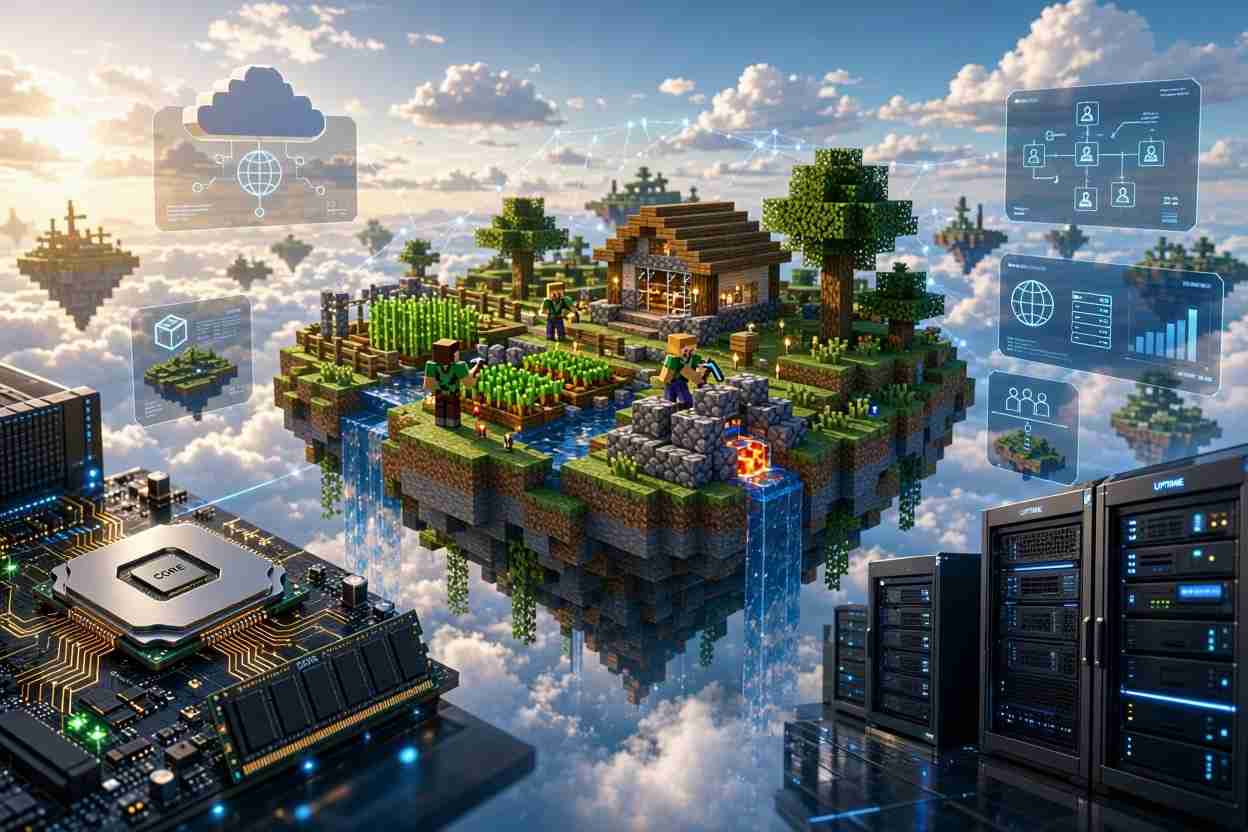
 Gaming technology has changed how people explore virtual worlds, interact with online communities, and enjoy creative challenges. Modern software and hardware work together to provide gaming experiences that are more interactive, accessible, and engaging. Minecraft is an excellent example of how technology can transform a simple gaming concept into an extensive digital environment filled with possibilities.
Among its many game modes, Minecraft Skyblock servers stand out for its unique approach to survival and resource management. Players begin on a small floating island with limited resources and gradually develop their surroundings. Instead of exploring an expansive landscape from the beginning, they must rely on creativity, planning, and problem-solving to progress.
Behind this seemingly simple experience is a combination of server software, computer hardware, networking technology, and digital infrastructure. These components allow players to connect, build, trade, and participate in shared activities. Understanding how they work provides a better appreciation of the technology supporting modern multiplayer gaming.
How Software Powers Minecraft Skyblock Servers
Software provides the foundation for every Minecraft multiplayer experience. It manages game mechanics, player interactions, world generation, and communication between connected devices. Without properly configured software, maintaining a stable and enjoyable multiplayer environment would be difficult.
Minecraft Skyblock servers use specialized software to introduce features beyond the standard survival experience. Server administrators can install plugins that manage individual islands, create virtual economies, organize challenges, and introduce custom rewards. These additions give players more opportunities to explore different gameplay styles while maintaining the central Skyblock concept.
Island management software is particularly important. It allows players to create personal spaces, invite friends, control permissions, and protect their structures. Automated systems can also manage island upgrades and track player achievements. These features reduce the need for constant administrative intervention and help communities operate more efficiently.
Virtual economies are another interesting example of software integration. Many Skyblock communities allow players to purchase resources, sell items, and exchange goods through digital marketplaces. Server plugins manage transactions, maintain account balances, and organize available products. These systems introduce an additional layer of strategy because players must decide how to use their resources effectively.
Database technology also supports these activities. Servers may store information about player inventories, island progress, financial transactions, and achievements. Reliable data management helps ensure that progress remains available when players disconnect and return later.
Security software plays an equally important role. Multiplayer environments require protection against unauthorized access, cheating, and disruptive behavior. Administrators can implement monitoring tools, permission systems, and automated moderation features to maintain a fair environment. Regular software updates also help address vulnerabilities and improve compatibility.
For players interested in exploring Minecraft Skyblock servers, understanding these features can make choosing a community easier. Some servers focus on traditional survival mechanics, while others offer advanced automation, competitive rankings, and customized progression systems. Each approach demonstrates how flexible software can shape the overall gaming experience.
The Importance of Hardware in Multiplayer Gaming
While software determines how a game operates, hardware provides the processing power needed to keep everything running. Multiplayer servers must handle numerous activities simultaneously, including player movement, environmental changes, item management, and communication between connected users.
The central processing unit, commonly known as the CPU, is one of the most important hardware components. It processes instructions and manages calculations required by the game. In Minecraft, processor performance can significantly influence how smoothly a server handles active worlds and complex gameplay mechanics.
Skyblock environments can become increasingly demanding as players expand their islands. Automated farms, redstone machines, generators, and large collections of entities require additional processing resources. A capable processor helps manage these activities without introducing excessive delays.
Random access memory, or RAM, also contributes to server performance. It temporarily stores information that the server needs to access quickly. Communities with numerous active players, extensive plugins, and large worlds generally require more memory than smaller multiplayer environments.
Storage technology is another consideration. Solid-state drives provide faster data access than traditional mechanical hard drives. This can improve world loading, data retrieval, and backup operations. Reliable storage also helps administrators preserve player progress and recover information when technical problems occur.
Networking hardware connects the server to its community. Routers, network interfaces, and reliable internet connections help maintain communication between players and the game environment. Network stability is particularly important when players connect from different countries or regions.
Players also benefit from suitable personal hardware. A computer with adequate memory, a capable processor, and appropriate graphics performance can provide smoother gameplay. However, expensive gaming equipment is not always necessary. Adjusting graphics settings, reducing render distance, and closing unnecessary applications can help improve performance on modest systems.
The relationship between server hardware and personal devices highlights the importance of balanced technology. Even a powerful gaming computer cannot completely compensate for an unstable server. Similarly, excellent server infrastructure cannot eliminate every performance limitation on a player’s device.
How Technology Enhances the Future of Skyblock Gaming
Advancements in software and hardware continue to create new opportunities for Minecraft communities. Developers can introduce more sophisticated gameplay systems, while improvements in computing infrastructure allow servers to support increasingly ambitious projects.
Cloud computing has become a practical option for multiplayer hosting. Instead of maintaining physical equipment, administrators can rent computing resources from hosting providers. Depending on the hosting arrangement, they may also adjust available resources as their communities grow.
Automation is another area with considerable potential. Server management tools can schedule backups, monitor performance, identify technical problems, and restart services when necessary. These capabilities allow administrators to spend more time developing gameplay features and supporting their communities.
Cross-platform technology is also expanding accessibility. Compatible server configurations can allow players using different Minecraft editions to participate in shared environments. This creates opportunities for friends with different devices to enjoy multiplayer activities together, although compatibility depends on the server’s configuration.
Improved monitoring tools help administrators understand how their infrastructure performs. They can examine processor usage, memory consumption, network activity, and game performance. This information supports better decisions about hardware upgrades and software optimization.
Beyond entertainment, Skyblock offers opportunities to develop practical skills. Players learn resource management, basic economic principles, teamwork, and strategic planning. Those interested in technology can explore server administration, plugin development, programming, and computer networking through their involvement in gaming communities.
Creating a personal Skyblock server can also serve as an introduction to information technology. Administrators gain experience configuring applications, managing files, troubleshooting errors, and implementing security measures. These activities can build confidence with software and hardware concepts that extend beyond gaming.
Ultimately, Minecraft Skyblock servers demonstrate how different technologies can work together to create engaging digital experiences. From specialized plugins and database systems to powerful processors and reliable networking equipment, every component contributes to the virtual environment.
As technology continues to develop, players can expect new opportunities for creativity, collaboration, and exploration. Skyblock remains a compelling example of how software and hardware can turn limited virtual resources into an experience with nearly unlimited creative possibilities.