
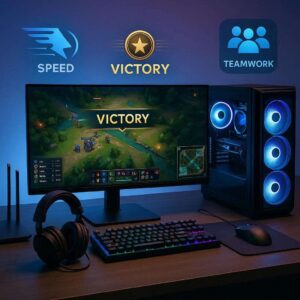
 Online gaming is no longer just a casual hobby for many players. It has become a competitive space where skill, timing, teamwork, and the right setup all matter. Whether you play for fun, join ranked matches, or aim to move higher in an online game league, your software and hardware can affect how well you perform. A strong setup will not make every player win right away, but it can remove many problems that hold players back.
Many gamers focus only on practice. Practice is important, but it is not the only factor. A player with poor internet, slow hardware, outdated drivers, or weak settings may struggle even if they understand the game well. Small delays can affect aim, movement, reaction time, and team coordination. In fast online matches, even a short lag can lead to a lost round or a missed chance.
This is why boosting Rocket League performance starts with building a reliable foundation. Your computer, console, internet connection, monitor, headset, mouse, keyboard, controller, and game settings all work together. If one part is weak, it can affect the whole experience.
Why Hardware Matters in Competitive Online Gaming
Hardware is the physical equipment you use to play. This includes your gaming PC, laptop, console, monitor, headset, keyboard, mouse, controller, router, and other devices. In online games, hardware affects speed, clarity, comfort, and control.
A strong processor helps your system handle the game smoothly. The processor, also called the CPU, manages many tasks at once. If it is too slow, your game may freeze, stutter, or load slowly. This can be a serious problem during ranked matches. A better CPU can help the game run with fewer delays, especially when many things happen on screen.
The graphics card, or GPU, is also important. It controls how the game looks and how smoothly the visuals move. A better graphics card can help you get higher frame rates. Frame rate means how many images your screen shows per second. A higher frame rate makes movement look smoother. This helps players react faster and track enemies better.
A good monitor can also support better performance. Many casual players use a standard monitor, but competitive players often choose monitors with higher refresh rates. A 144Hz or 240Hz monitor can show smoother motion than a basic 60Hz screen. This may not replace skill, but it can make aiming, movement, and timing feel more responsive.
Your mouse and keyboard also matter. A gaming mouse with adjustable sensitivity can help you control movement better. A mechanical keyboard can give faster and more reliable key presses. For console players, a comfortable controller with responsive buttons can make long gaming sessions easier.
Audio hardware should not be ignored. A good headset helps players hear footsteps, ability sounds, warnings, and team communication. In many games, sound gives important clues. You may hear where an enemy is coming from before you see them. Clear audio can help you make better decisions during a match.
Internet hardware is also part of your gaming setup. A stable router and wired connection can reduce lag. Wi-Fi may be convenient, but it can be less stable than an Ethernet cable. In online leagues, stable connection matters because every move must reach the game server quickly. If your connection drops or spikes, your actions may happen too late.
Comfort is another factor. A good chair, proper desk height, and clean cable setup can help you stay focused. Competitive gaming often requires long hours of practice. If your body is uncomfortable, your focus can drop. This may lead to poor decisions, slower reactions, or fatigue.
Hardware does not need to be the most expensive to be useful. The goal is to build a setup that is stable, responsive, and comfortable. A balanced setup is better than spending too much on one part while ignoring the others. For example, a powerful gaming PC will not help much if your internet connection is unstable.
How Software Improves Game Stability and Control
Software is just as important as hardware. It includes your operating system, drivers, game settings, security tools, communication apps, and performance software. When software is not managed well, your game may run poorly even on strong hardware.
Drivers are one of the first things to check. Drivers help your hardware communicate with your system. Graphics drivers, audio drivers, and network drivers should be updated when needed. Outdated drivers can cause crashes, lower performance, or connection problems. Keeping them updated can help your system run games better.
Game settings also play a major role. Many players want the best-looking graphics, but high settings can reduce performance. In competitive matches, smooth gameplay is often more important than visual detail. Lowering shadows, effects, motion blur, and unnecessary details can improve frame rate. A cleaner screen can also make it easier to spot enemies and read the match.
Mouse sensitivity and key bindings are also part of software control. Players should choose settings that feel natural and repeatable. If your sensitivity is too high, your aim may become unstable. If it is too low, you may react too slowly. The right setting depends on the game and your play style. Once you find a good setup, it helps to keep it consistent.
Operating system settings can also affect gaming. Background apps can use memory, CPU power, or internet bandwidth. Before serious matches, it helps to close apps that are not needed. Streaming platforms, browser tabs, file downloads, cloud backups, and update tools can slow things down. A clean system gives your game more room to perform well.
Communication software is also important in team games. Apps like Discord or in-game voice chat help players coordinate. Good communication can turn an average team into a stronger one. Players can call out enemy locations, plan attacks, warn teammates, and adjust strategies. Clear voice settings and a good microphone can improve teamwork.
Security software should also be managed carefully. Antivirus tools protect your system, but some can scan files during gameplay and cause slowdowns. You should not turn off protection completely without care, but you can schedule scans outside gaming hours. This helps keep your system safe without hurting performance during matches.
Game launchers and update tools should also be checked. Make sure your game is fully updated before joining important matches. A surprise update before a league session can waste time or cause stress. It is also wise to check patch notes. Game updates can change weapons, characters, maps, and ranking systems. Understanding these changes can help players adapt faster.
Recording and streaming software can affect performance too. Many content creators record matches for review or upload. This can be useful, but it can also use system resources. If your game starts lagging while recording, you may need to adjust recording quality or use hardware encoding.
Software is not only about speed. It also helps with review and learning. Some games offer replay systems, match history, and performance stats. These tools can help players study mistakes. You can see where you died, why a team fight failed, or how your positioning could improve. This kind of review supports long-term growth.
Building a Better Setup for Boosting Online Game League Results
Boosting online game league performance should start with honest review. Players should look at their current setup and identify weak points. Is the game lagging? Is the screen tearing? Is the internet unstable? Are team calls unclear? Are controls uncomfortable? Each problem needs a direct fix.
The first step is checking game performance. Players can monitor frame rate, ping, packet loss, and system usage. Frame rate shows how smoothly the game runs. Ping shows how fast your connection talks to the server. Packet loss means some data is not reaching the server properly. These numbers can reveal whether the problem comes from hardware, software, or internet connection.
Next, players should adjust graphics settings. Competitive settings are usually simple and clean. The goal is not to make the game look cinematic. The goal is to make it clear, smooth, and responsive. Turning off heavy effects can help players focus on what matters during a match.
Internet setup should be checked as well. A wired connection is often better than Wi-Fi. If Wi-Fi is the only option, the router should be placed close to the gaming device. Other users on the same network can also affect performance. Downloads, video streaming, and large uploads can increase lag. Scheduling heavy internet use outside gaming hours can help.
Players should also keep their system clean. This means removing unused apps, updating drivers, checking storage space, and restarting the device before important sessions. A full storage drive can slow down a system. Too many startup apps can also reduce performance. Simple maintenance can make a noticeable difference.
Another important step is creating a practice routine. Software and hardware can support performance, but they cannot replace discipline. Players should practice aim, movement, map knowledge, team communication, and decision-making. They should also review matches to understand what went wrong. A better setup gives players the tools, but improvement still depends on smart practice.
Team-based players should focus on communication. A good headset and clear voice settings can help teams move as one unit. Players should avoid shouting, blaming, or talking too much during matches. Short and useful callouts are better. Good communication helps the team react faster and stay organized.
Comfort should also be part of the plan. Long gaming sessions can cause hand strain, back pain, eye fatigue, and loss of focus. Players should take short breaks, stretch, adjust screen brightness, and sit properly. A comfortable setup helps players stay sharp for longer periods.
It is also important to set realistic goals. Not every player will climb ranks overnight. Online league improvement takes time. Better hardware and software can remove barriers, but players still need patience. Focus on steady progress. Track small wins, such as better aim, fewer mistakes, stronger teamwork, or improved map awareness.
Players who want to boost their online game league results should also stay fair. Competitive games work best when players follow the rules. Avoid cheats, hacks, account sharing, or dishonest tools. These may lead to bans and can damage the gaming community. Real progress comes from better preparation, better practice, and better teamwork.
The best setup is the one that supports your goals. A beginner may only need stable internet, smooth settings, and a decent headset. A serious ranked player may need a higher refresh monitor, better peripherals, and stronger performance tools. A content creator may also need recording software and extra storage. Your setup should match how you play.